
Radon Testing in New Jersey
Professional Radon Testing in New Jersey
Eagle Eye Inspections, LLC provides professional radon testing for home buyers, sellers, and homeowners throughout Northern New Jersey. Testing is performed by a New Jersey-certified radon measurement technician, #MET13753, using approved testing procedures and equipment.
Radon is invisible and has no smell or taste. Testing is the only way to determine the radon concentration inside a home. A radon test can be scheduled as a separate service or together with a comprehensive New Jersey home inspection.
After the test is completed, you receive written results showing the measured radon concentration in picocuries per liter of air (pCi/L), along with an explanation of the findings and appropriate next steps.
What Is Radon?
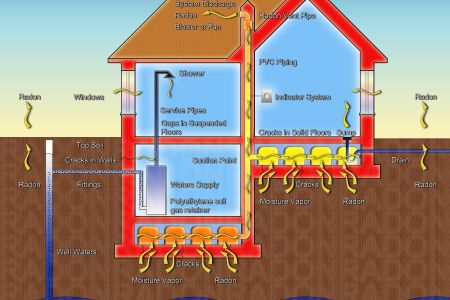
Radon is a naturally occurring radioactive gas produced by the breakdown of uranium in soil, rock, and groundwater. It can enter a building through openings in and around the foundation, including cracks, joints, utility penetrations, sump openings, and gaps around pipes.
According to the U.S. Environmental Protection Agency, radon is the second-leading cause of lung cancer overall and the leading cause among people who have never smoked. Any home can have an elevated radon level, regardless of its age, construction type, or whether it has a basement.
What Our Radon Testing Service Includes
- Placement of approved radon-testing devices in an appropriate location
- Instructions for maintaining required closed-building conditions
- Documentation of the testing location and property conditions
- Retrieval of the testing devices after the required exposure period
- Professional laboratory analysis when applicable
- A written report showing the measured radon concentration in pCi/L
- A clear explanation of the results and recommended next steps
Understanding Your Radon Test Results
The EPA recommends taking action to reduce radon when the test result is 4.0 pCi/L or higher. Because no level of radon exposure is considered completely risk-free, the EPA also advises homeowners to consider reducing levels between 2.0 and 4.0 pCi/L.
An elevated result does not mean that the home cannot be purchased or safely occupied. Radon levels can usually be reduced with a properly designed mitigation system installed by a qualified New Jersey radon mitigation professional. A follow-up test should be performed after installation to verify that the system is working effectively.
When Should a Home Be Tested for Radon?
- During the purchase or sale of a home
- When a home has never previously been tested
- After major renovations or changes to the foundation
- After installing a radon mitigation system
- When converting a basement or lower level into living space
- Periodically, because radon levels can change over time
Radon levels can vary between neighboring properties, so a low result in one home does not predict the level in another. Testing the individual property is the only reliable way to determine its radon concentration.
Preparing for a Short-Term Radon Test
Closed-building conditions must be maintained as instructed before and during a short-term test. Exterior doors and windows should remain closed except for normal entry and exit. Heating and cooling systems may operate normally, but fans or equipment that continuously bring outdoor air into the building may affect the test.
The testing devices must remain in their original locations and should not be touched, covered, moved, or exposed to unusual airflow. Detailed instructions are provided when the test is scheduled.
Frequently Asked Questions About Radon Testing
Can a home without a basement have elevated radon?
Yes. Radon can enter homes built over basements, crawlspaces, or concrete slabs. The foundation type does not eliminate the need for testing.
How long does a radon test take?
The required testing period depends on the device and testing protocol. Most short-term real estate transaction tests remain in place for at least 48 hours.
Where is the radon test placed?
The device is generally placed in the lowest level of the home that is suitable for occupancy, following applicable New Jersey testing requirements and device-placement protocols.
What happens if the radon result is elevated?
Depending on the result and circumstances, additional testing or installation of a radon mitigation system may be recommended. We explain the report and help you understand the appropriate next step.
Can radon levels change?
Yes. Radon levels may change with weather, soil conditions, ventilation, renovations, and modifications to the home. For that reason, periodic retesting is advisable.